


From the first VW trucks to the giant Meteor, custom-made trucks;
The Volksbus, a global success both on the road and at school;
The journey towards zero emissions began with ethanol and has now reached batteries.
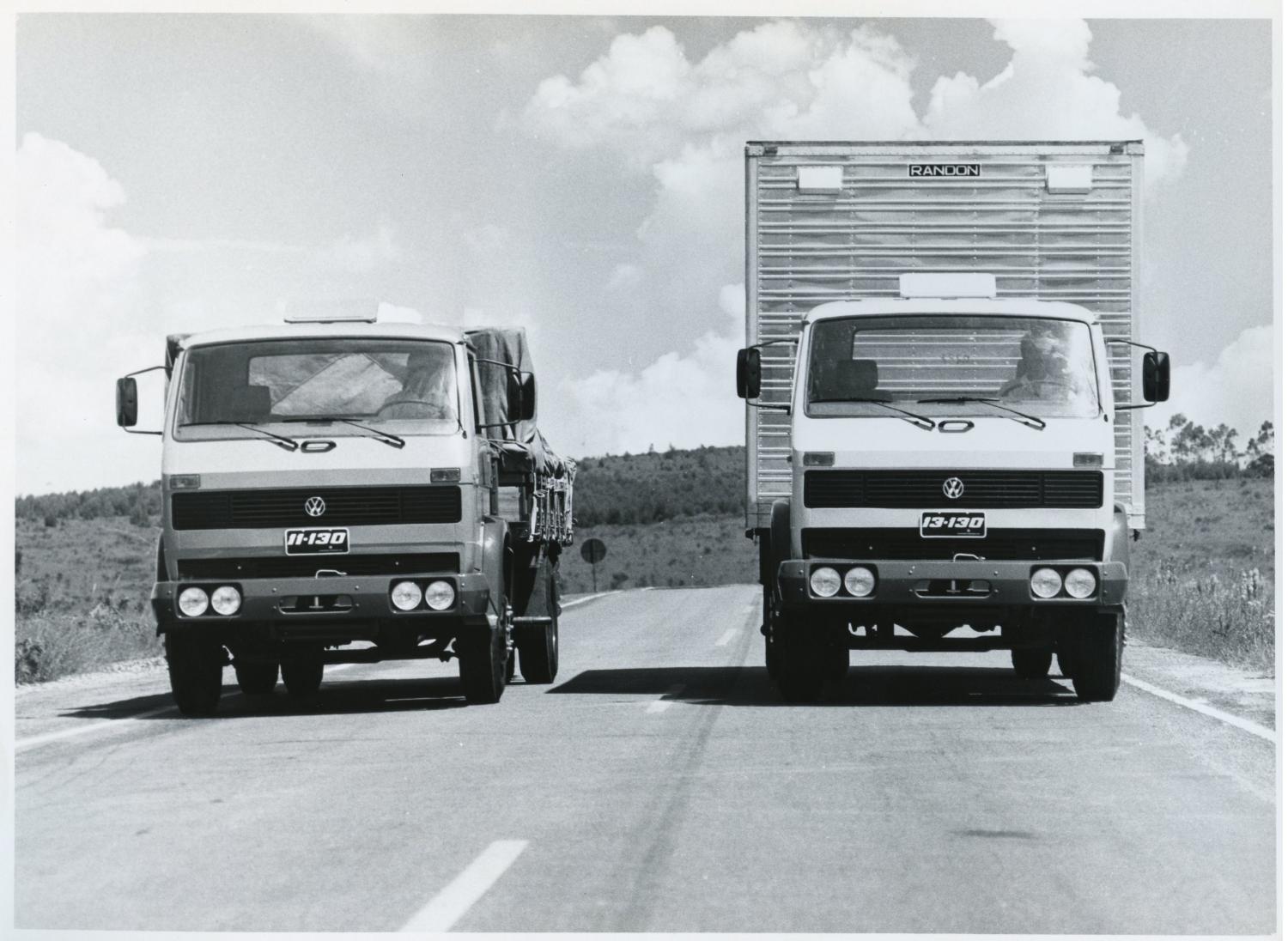
On March 10, 1981, exactly 45 years ago, Brazil was first introduced to VW trucks, which soon after conquered the world. The pioneering VW 11.130 and 13.130 left Factory 4 in São Bernardo do Campo (SP) bound for the newly created authorized dealership network. It was the start of a journey that would transform the assembler into one of the sector’s leading names in Brazil and around the worldwide in cargo and passenger transport with the Volksbus family, which debuted in 1993. VWTB has not stopped developing ever since and today offers a complete product line.
In recent decades, VWTB has undergone an extensive technological renewal process. Its product families have been completely redesigned to incorporate 4,500 new parts, and there are now more than 100 vehicles involved in the company's largest engineering study. The result is a more efficient, safer, sustainable, and better-connected portfolio, geared toward current and future transportation demands.
Trucks that made history
Over the years, VWCO has reached milestones that have redefined the market and sustained the company's leadership in the truck market segment. The development of the 2000 Series represented VWTB's first major in-house engineering project and involved the simultaneous launch of 15 new models, all with more powerful engines, increased load capacity, and redesigned cabs. This also gave rise to the custom-made concept, which consolidated the assembler as an industry reference in high-level customization and professional solutions.
The Constellation family, which was launched in 2005 with an investment of R$ 1 billion and tested on three continents, became synonymous with durability, comfort, and technology and remained among the best-selling models in the country for almost two decades.
Geared toward urban operation, the Delivery family, which was created during the same period, recorded a total of 107,000 units sold in its first generation. In 2017, the line entered a new phase, and was recognized for its automobile-like drivability -- a decisive factor in urban distribution and logistics operations.
The product portfolio was completed in 2020 with the launch of the VW Meteor, marking VWTB's return to the heavy-duty market segment. With a modern design and Industry 4.0 manufacturing, the model brought a new level of performance for long-distance operations and consolidated the company's presence across every category of road transport.
The pace of evolution continued to accelerate. In 2021, VWTB began series production of the e- Delivery, the first electric truck 100% designed and manufactured in Brazil. With this release, the Resende plant became the first in the country to complete large-scale assembly of zero-emission vehicles, reinforcing the company's commitment to sustainability and energy transition.
A pioneering spirit and social impact
Created in 1993, the Volksbus line represents another essential brand pillar. Using 100% Brazilian engineering, this vehicle family has always provided solutions aligned with the needs of emerging countries, incorporating competitive technologies and development processes comparable to the most modern seen in global industry.
This line has also made a strong social impact. Over the years, approximately 30,000 buses have been supplied to the Caminho da Escola (“Road to Education”) program, impacting more than 40 million students in remote regions of Brazil and guarantee mobility and access to education.
With a diversified portfolio, continuous investments in research and development, and a focus on multiple energy sources, Volkswagen Truck & Bus maintains its commitment to developing increasingly efficient and sustainable solutions for the challenges of decarbonization. Today, the brand has 1,250,000 vehicles in circulation, 196,000 of which are operated overseas, and continues to be recognized as one of the world’s largest commercial vehicle manufacturers.