



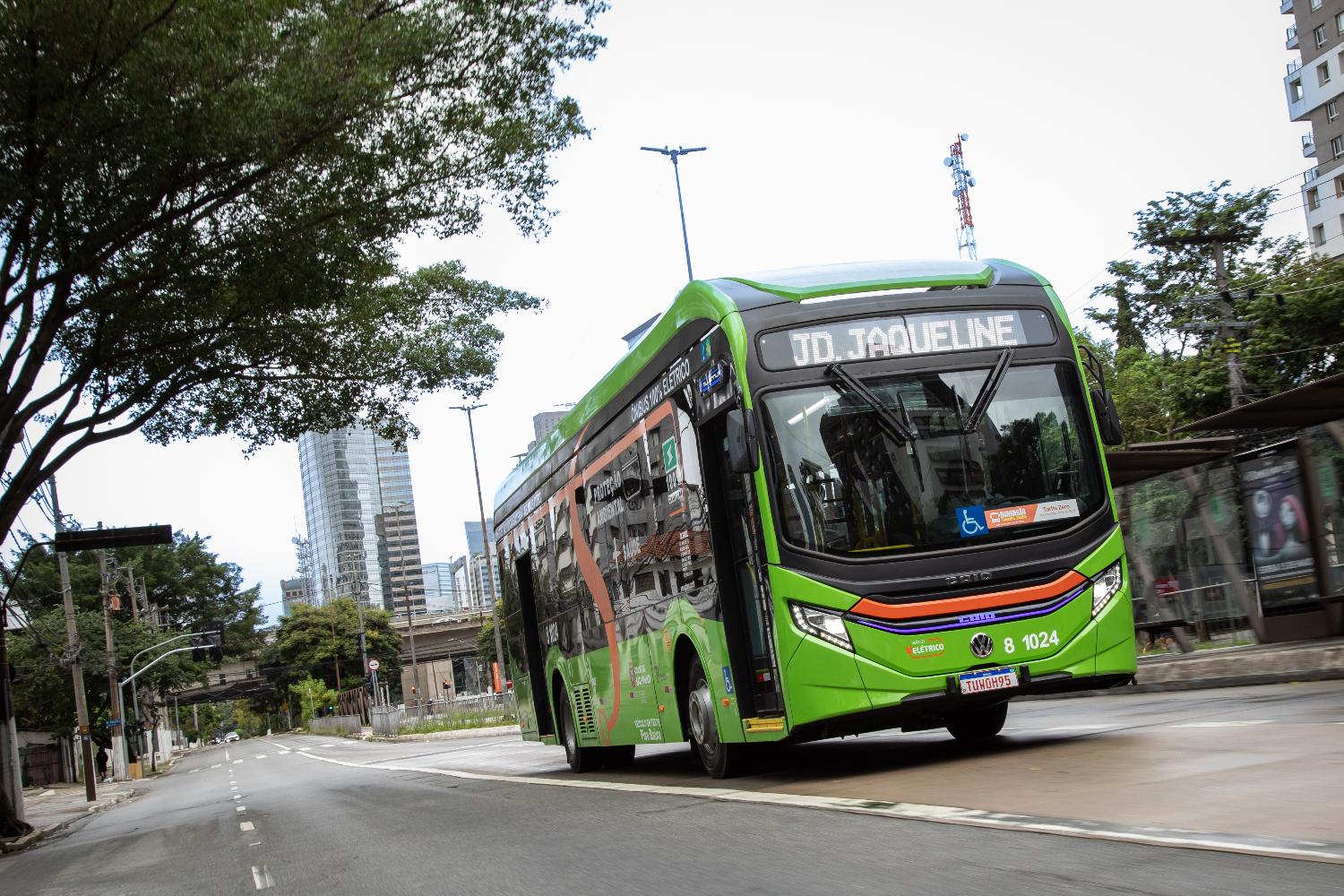
- First units of the inaugural lot of 100 e-Volksbus arrive in the capital of São Paulo
- Assembler reaches a record of 1,250,000 vehicles produced in its history with the new e-Volksbus
A pioneer in the field of electric trucks in Brazil, Volkswagen Truck & Bus is set to begin delivering its first electric buses. The e-Volksbus will be launched in São Paulo, and its release will subsequently be extended to other cities, including Resende. And there’s more good news: the company recently reached a historic level of production. Last week, VWTB reached a total of 1,250,000 units manufactured, and it was the e-Volksbus 22L itself that came fresh off the assembly line to reach this milestone.
“This is a major milestone in our industry and highlights Volkswagen Truck & Bus' commitment to Brazil and our ESG policy. It was with great joy that we coincided the production of our 1,250,000th unit with a copy of our new e-Volksbus, marking a new era in passenger transport. The release of the e-Volksbus 22L is also part of preparations for more celebrations that are yet to come: the 45-year anniversary of Volkswagen Truck & Bus and 30-year celebrations for our Resende plant”, highlights Roberto Cortes, VWTB’s President and CEO.
The inaugural batch of the e-Volksbus 22L includes a total of 100 units, and the first deliveries were just recently made and were destined for the transport company Transpass, which is responsible for the acquisition of 50 vehicles. Remaining units will be made available to other public transport companies starting January 2026. The e-Volksbus 22L will soon be available in other Brazilian cities, including Resende, where the assembler's plant is located.
This purchase volume directly reflects the vehicle’s successful trial period. Since May, the e-Volksbus 22L has been undergoing evaluations under real-life operating conditions in São Paulo, proof of the efficiency and reliability of VW Truck & Bus’ products. In the southern region of Rio de Janeiro state, the first e-Volksbus will be delivered this week to the city of Resende. The vehicle will be operated by transport company Viação Princesinha do Vale.
A comprehensive technical support program has been implemented to ensure the new buses provide an optimal performance and longevity. VWTB’s employees have offered customers direct orientations and strategies for operating the buses, as well as maintenance processes that can be performed at companies' garages.
After-sales service will also offer a key competitive advantage as part of the brand's strategy. VWTB’s dealership network is prepared to operate these vehicles and will guarantee a consistent stock of parts is available to provide maximum availability for operation. Services will also be custom tailored for operations. The objective of these strategies is to offer maximum availability.
"Since the testing period we have played a very active role and maintained close relationships with customers. In addition to training, VWTB’s team provides telemetry data and closely monitors the structuring of bus recharge plans to optimize the use of vehicles. We are establishing a new industry reference for services on the market”, explains Mr. Cortes.
A competitive edge and on-board comfort
With a capacity to carry up to 82 passengers, the e-Volksbus 22L can accommodate urban bus bodies with a length of up to 13.2 meters. The model offers 250 km of battery autonomy and is powered by a set of 12 battery packs. This configuration is already used in e-Delivery and offers a wide safety margin in more strenuous applications. The vehicle's "low entry" concept can be highlighted from among its accessibility, which includes a low floor in the central and front part of the bus and, when added to its kneeling, lifting and squatting system, facilitate and expedite passenger boarding and unboarding. The advantages offered by the e-Volksbus also include a smart air conditioning system that is completely integrated into the vehicle chassis’ electronic control systems, offering passengers maximum thermal comfort and optimizing the use of energy.